Pop Growth Outpaces Housing Starts

Pop Growth Outpaces Housing Starts

By Joe Guzzardi

Pop Growth Outpaces Housing Starts

The nation’s housing shortage, 6.5 million homes, is an out-of-control crisis, according to CNN’s dire warning last month. Between 2012 and 2022, 15.6 million households were formed. During the same period, 13 million housing units (9 million single-family homes and 4 million multi-family homes) were started. Of the 13 million, 11.9 million were completed (8.5 million single-family homes and 3.4 million multi-family homes).

In 2021’s second half and the first part of 2022, the fast-paced building spurt continued. Then, with the Federal Reserve determined that slowing inflation was essential, interest rates including those on mortgages rose, and housing demand cooled. Builders backed away from single-family housing starts. The solution to the shortage, CNN predicted, would be to triple the single-family home housing starts which would, within three or four years, close the existing 6.5 million shortage, and keep up with new demand.

The CNN story mentioned, but did not elaborate on, the shortage’s cause: in 2022, the U.S. saw the last decade’s highest annual household formation level with 2.06 million new households. Population growth, long ignored by Congress and the establishment media as toxic and unmentionable, drives the need for more development. The equation between ever-more people and the need to build homes for them is obvious, but unmentionable. Accelerating growth remains taboo because the subject will eventually come around to immigration, an even more uncomfortable topic.

The math that the Census Bureau and other federal agencies provide is inarguable. Every year, more than 1 million permanent residents enter the U.S. Another 1 million arrive on temporary employment visas. Whether they return to their home countries or not, they need housing during their visa’s term. Since Biden’s inauguration, his administration’s open border policy has welcomed about 5 million asylum seekers, with millions more to come before the president’s 2024 re-election bid.

Add more than 2 million gotaways — the 1.2 million to date that Customs and Border Protection knows about and the roughly million certain to elude border agents in the next 18 months. During the Biden administration’s four years, between 10 and 15 million legal permanent residents, guest workers, asylum seekers and gotaways will need housing. The Census Bureau predicts that by 2060 the nation’s immigrant population will rise from its current 14.3 percent to 17.1 percent of the total U.S. population.

The powerful pro-growth lobby maintains a $60 million Capitol Hill presence, and Congress’ informal motto is “the more, the better,” especially if it makes donors’ wishes come true. The list of negatives that over-development worsens is long. Among them are biodiversity loss, carbon emission increases and overcrowding. At the top of the list, however, are water shortages, a problem so acute that the Biden administration has proposed cutting the Colorado River’s water allotments delivered to California, Arizona and Nevada by as much as one-quarter. The Colorado River provides drinking water to 40 million Americans and irrigates 5.5 million agricultural acres.

With water running low and development an increasing environmental scourge, a responsible federal government would comply with the requirement to weigh the environmental effect on any new policies it enacts; opening the Southwest and Northern Borders would be such a policy. The National Environmental Policy Act and the Endangered Species Act require an environmental impact study. But like U.S. immigration laws, the Biden administration ignores the federally mandated obligation to conduct environmental impact studies, perhaps because it knows that the results would be catastrophic to developers and to Biden’s commitment to mass immigration.

Immigration and births to immigrants are the biggest population growth drivers in the U.S. As long as the status quo continues, housing demand will be impossible to fully satisfy. Good luck to builders tackling that challenge, especially in the increasingly dry Southwest, and good luck to the established neighborhoods that will have to cope with the quality-of-life-altering sprawl that overdevelopment creates.

Pop Growth Outpaces Housing Starts

Joe Guzzardi writes about immigration issues and impacts.

Pop Growth Outpaces Housing Starts

Giant Cruise Ships Bad For Environment

Giant Cruise Ships Bad For Environment

By Joe Guzzardi

Giant Cruise Ships Bad For Environment

The cruise ship industry puts out beguiling advertisements intended to attract more customers on board. Showing couples in summer wear, sipping cocktails and looking out over the ocean to watch the setting sun as they sail off to a distant, romantic destination, ads appear everywhere, from television, social media and movie previews to subway cars.

A closer look at the cruise ship business and its harmful effects on the ecosystem paint a far grimmer picture than advertisements convey. Hakai Magazine, an online publication that focuses on science and society in coastal regions, created the route of the Oceanic Topaz, a fictional but representative cruise ship, on a seven-day journey from Seattle to Alaska. The weeklong trip stopped at various ports like Juneau, Ketchikan and Victoria, before returning to Seattle.

This year, an estimated 700,000 passengers will depart Seattle on hundreds of different cruises. Travelers’ voyages are on increasingly massive ships that house, feed and process the waste of upward of 4,000 passengers. From 2015 until today, the average weight of a major line’s new cruise ship was 164,000 gross tons — more than twice the size of a ship built during the 1990s. The Symphony of the Seas weighs a staggering 228,081 gross tons.

Touted as inexpensive, all-inclusive vacations, Pacific Northwest cruises deliver thousands of people to the glaciers, fjords and small towns of southeast Alaska. Cruises are an integral part of the Pacific Northwest’s tourism economy, but they bring with them significant environmental degradation and deleterious human consequences. Carbon emissions, wastewater discharges, engine and propeller noise, mountains of trash and an unmanageable tourist influx have had a damaging cumulative impact on the ecosystems of tiny communities. As they move from stop-to-stop, the massive vessels disrupt fish, whales and birds; while docked, residents.

This tourism season, 13 ships will make 291 trips between Seattle and Alaska; the imaginary Oceanic Topaz will begin its journey in Seattle which derives significant economic benefits from cruise passengers. In 2022, cruise tourists spend around $900 million in the greater Seattle area, income that supports about 5,500 jobs. That’s the good news. On the other hand, as an Alaska-bound ship sets sail, its 3,600 passengers go about their daily business of flushing toilets, showering and brushing teeth. Each passenger will produce a daily average of 7 gallons of sewage — also known as black water — and about 66 gallons of wastewater from showers, pools, laundry and other non-sewage runoff known as gray water. For a ship carrying 3,600 people, that amounts to about 400 eight-person hot tubs worth of sewage and over 3,000 hot tubs worth of gray water each day.

A grand ship voyage with dramatic views and promised nonstop fun on board is hard for tourists to resist. But add together the carbon emissions, wastewater pollution, noise impacts, trash, thousands of tourists and the impact on wildlife, and the negative effect of cruising is overwhelming.

The argument for economic gains for small communities is understandable and persuasive. But as the Oceanic Topaz example shows, the regions that host these mammoth floating hotels also have a lot to lose. In 2019, in Victoria, where cruise ships have the option to offload accumulated garbage rather than return it to their home port of Seattle, the equivalent of 100 fully loaded garbage trucks were dumped in the region’s Hartland Landfill.

Pre-COVID, the cruise industry’s aggregate revenue hit $27 billion. The U.S., with its long coastlines and easy access to Caribbean ports, leads the world in cruise revenue. By 2026, cruise revenue is expected to reach $35 billion.

Cruise lines have a powerful presence in Washington, D.C. Unlike U.S. airlines and hotels, cruise lines did not benefit from generous government subsidies since they are not registered in the U.S., and therefore American laws do not entirely bind them. Consequently, lobbying by cruise lines spiked from the average $3.5 million between 2009 and 2019 to $4.4 million in 2020 and $5.3 million in 2021. The objective: to get those floating hotels back on the water after the sharp COVID-19-related decline.

An all-out ban on cruise ships is unrealistic, but daily limits at ports-of-call make sense. Based in part on a 2022 commissioned study that the Juneau Assembly requested and in which 74 percent of residents supported limits, the final approval urged a five-ship limit. But such an obvious idea to at least reduce the adverse outcome for residents and the ecosystem has little chance against Big Money interests.

Giant Cruise Ships Bad For Environment

Joe Guzzardi writes about immigration issues and impacts. Find his immigration pieces at Immigration News on Substack.

Giant Cruise Ships Bad For Environment

3 Seek Dem Nod For Chester Mayor

3 Seek Dem Nod For Chester Mayor

By Bob Small

There’s a three way race for the Democratic nomination for Mayor of Chester.  Incumbent Thaddeus Kirkland is trying to hold off the challengers; City Councilman Stefan Roots and Realtor Pat Worrell.

The primary election is May 16.

Kirkland’s tenure has seen numerous scandals.

The Pennsylvania Ethics Commission ordered him to pay back $2,000 to the state.  He also received $15,000 in campaign finance contributions from individuals and entities connected to PFS V11 which has a parking contract connected with the City of Chester.  There’s more but space is limited.

Kirkland, who was previously a state representative, is pastor  of Community Baptist Church.  He has a Bachelor of Arts from Cheyney University.  He and his wife have five daughters.

Pat Worrell is owner and operator of the Worrell Real Estate firm. She is a member of the Chester Zoning Hearing Board and had served as chairwoman.

She has run for magisterial district judge (2011), state senate (2012) and County Council (2013).  She has been endorsed by PMBR (Philadelphia Metropolitan Board of Realty), Frank Daly, Estate Attorney, and NAREB (National Association of Real Estate Brokers.)

Stefan Roots is familiar to many of us from his occasional columns in both the Delco Times and The Swarthmorean.  In 2006, he launched the Chester Spotlight and currently edits the Chester Matters Blog

In January 2022 he was elected to Chester City Council.  He has a bachelors degree in electrical engineering  from Villanova.  He notes his campaign was championed by Todd Strine, co-owner of the Swarthmorean, and part of the wealthy Strine family.

He is crusading to shut down the Covanta trash-to-steam plant, which brings the city $8 million per year of 15 percent of its budget. It also generates electricity for 48,000 homes

He is not impressed with Kirkland.

“I work with the man every day and I haven’t seen or heard any vision coming from him,” he said.

There will be a virtual candidate forum on Wednesday, April 26.

Then again, none of this may matter.

3 Seek Dem Nod For Chester Mayor

Mickey Mantle’s Regrets

Mickey Mantle’s Regrets

By Joe Guzzardi

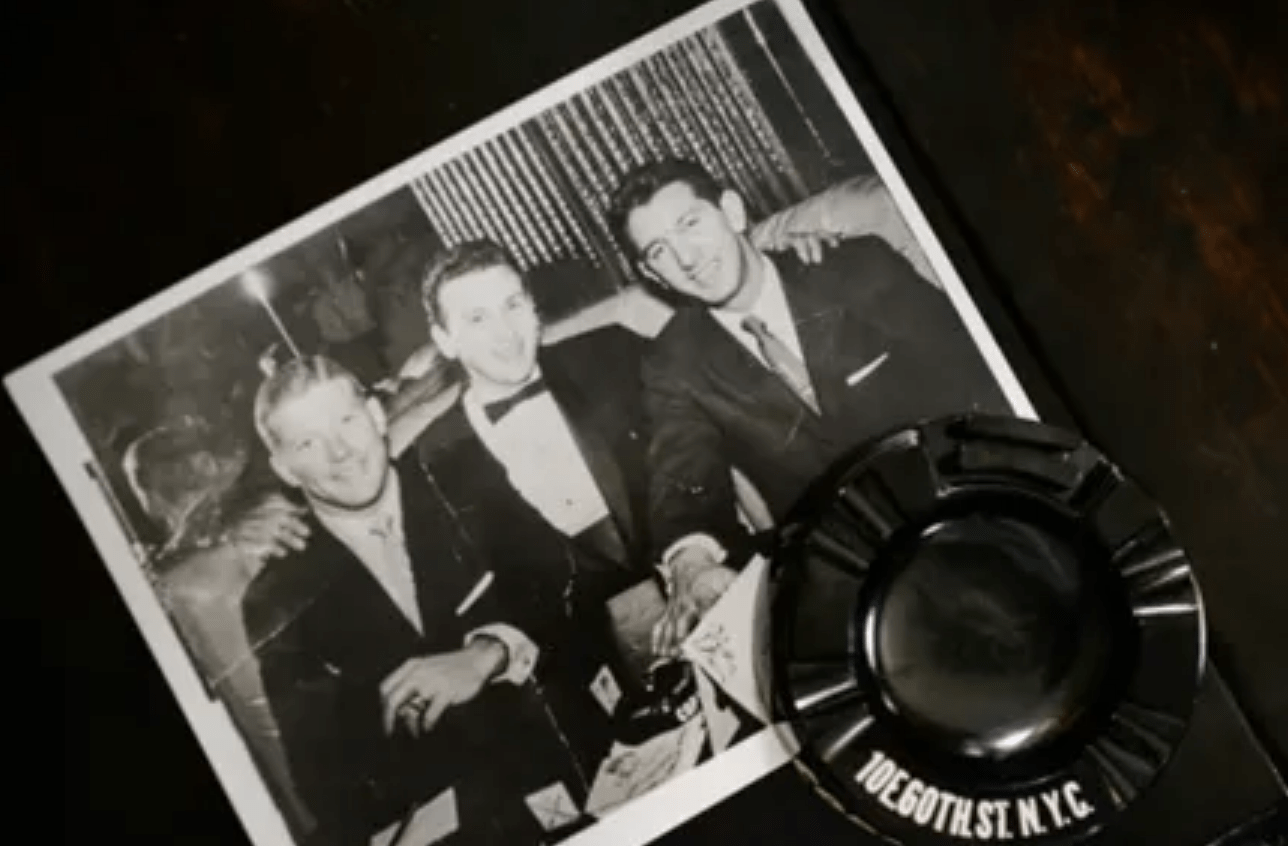
In 1994, a year before his death from alcohol-induced cirrhosis, hepatitis C and inoperable liver cancer, Mickey Mantle gave a remorseful interview to Sports Illustrated. The New York Yankees superstar center fielder and first-ballot Hall of Fame inductee recounted his life as an alcoholic with brutal candor. Mantle admitted that because of alcohol abuse, he ended up “killing himself.”

Except to other alcoholics, Mantle’s confession about how drinking kept him from living a more fulfilling life and ruptured his relationships with friends and family doesn’t square with baseball diamond fame. Mantle began some of his mornings with what he called the “breakfast of champions,” a big glass filled with a shot or more of brandy, some Kahlúa and cream. Yankees’ second baseman Billy Martin, a regular drinking partner, and Mantle would stop at Mickey’s Central Park South restaurant where the bartender blended the ingredients and served them up. As Mickey remembered, the frozen drinks “tasted real good.”

Mantle’s “breakfast of champions” was the first of many drinks he threw back each day. Inevitably, Mickey’s heavy drinking led to long blackout periods. By his own admission, Mantle would forget what day it was, what city he was in and about his commitments to appear at baseball card signing shows, although he eventually showed up. The best man at Martin’s 1988 wedding, Mantle “hardly remember(ed) being there.” One year later, Mantle served as a pallbearer at Martin’s funeral. Billy had been killed in a single vehicle automobile accident on Christmas Day. Although there is some dispute about whether Martin or his friend Bill Reedy drove, no one questions that the pair had been drinking heavily in the hours before the fatal crash.

Mickey Mantle’s Regrets

After Mantle retired, his drinking became, in his words, “really bad.” He went through a deep depression. Teammates Billy, Whitey Ford, Hank Bauer and Moose Skowron were part of his past life, and leaving those guys “left a hole in me.” Mantle tried to fill up his baseball emptiness with nonstop alcohol intake.

The older Mantle got, the more he drank. Family and friends begged Mantle to get help. But Mantle stubbornly refused. Like too many alcoholics, Mantle foolishly convinced himself that he could stop whenever he wanted. But at a charity golf outing for the Harbor Club Children’s Christmas Fund near Atlanta, Mantle hit bottom. He drank Bloody Marys in the morning, and then downed two bottles of wine in the afternoon. At the card show that evening, Mantle embarrassed himself with his obnoxious, drunken behavior. In his alcohol-fueled stupors, Mantle often berated autograph seekers, a shock to his fans who cherished his image as a homey, blond-hair, crewcut Oklahoma kid.

Atlanta was an overdue awakening for Mantle. Finally seeking guidance, Mantle approached his son Danny who had been treated at the Betty Ford Center. Three of Mantle’s four sons and his wife Merlyn were also alcoholics. While Mantle deliberated about checking into the Betty Ford Center, his doctor gave him his MRI results: Mickey needed a liver transplant.

Once at Betty Ford, Mantle confronted his uncomfortable truth. Mantle admitted that, as he told Sports Illustrated, “he really screwed up,” was a lousy family man, and preferred running around with his baseball buddies. Envisioning his life as a sober, responsible Mantle, Mickey had big plans, but did not live long enough to realize them to the fullest. His goal was to stay sober, be strong and make amends. At his final press conference, Mantle said to an audience aghast at his wasted-away body: “This is a role model: Don’t be like me.”

Today, Mantle is remembered mostly for his brilliant baseball achievements: 20 All-Star games, three AL MVP awards including one in his 1956 Triple Crown season, seven World Series championship rings, four AL Home Run crowns, and a first ballot Hall of Fame inductee.

But for the millions of Americans suffering from alcoholism, Mantle’s ability to overcome – although too late to save his life – is a bigger triumph than any of his baseball feats. For more information, go to the National Alcohol Awareness Month website here.

Joe Guzzardi is a Society for American Baseball Research and Internet Baseball Writers Association member. You can also read his content here. Contact him at guzzjoe@yahoo.com.

Mickey Mantle’s Regrets Mickey Mantle’s Regrets

Ball of Confusion — Yeadon version

Ball of Confusion — Yeadon version

By Bob Small

Vote For Me and I’ll Set You Free  

The Temptations 1970

The Temptations – Ball of Confusion Lyrics

Yeadon, in Delaware County, PA, has seen an overabundance of confusion recently, and there is even some confusion in the Borough Council election. The Yeadon Borough Council removed the former police chief, popular with many members of the public, due to a charge of “overspending”. There were protests from both members of the public and dissenting council members.

There was also some controversy around Johanna McClinton’s choice as Pennsylvania’s first female  African-American Speaker of the House.  

Mark Rozzi, the previous Democratic speaker, stepped aside so that McClinton, whose 191st District includes Yeadon, could finally become speaker.

Yeadon claims to be the home of the original founder of Flag Day, though there are other contenders for that.

Yeadon boasts an all-female borough council. (Swarthmore, by contrast, has one token male borough council member.) For this election, there are three incumbents with five challengers, all of the Democratic Party persuasion. None of the challengers has a current campaign website, Facebook page, or any other electronic presence, which seems unusual in 2023. Nothing for the Yeadon Democratic Party either.

All eight Democrats were invited to a Yeadon Council candidate forum, but only two incumbents and two challengers attended. One would expect more energy from candidates running for vulnerable posts, but …

One of the challenger Candidates, Jessie Peets, said that after attending a Borough Council meeting at the urging of his social media feed, he “immediately saw that something was very wrong and he had to do something about it.”

Denise H. Stinson, also a challenger candidate observed that “You can agr3e to disagree but you don’t have to be mean about it.”

One might expect there to be more of a social media presence in this election but that may not be what wins elections.

Ball of Confusion -- Yeadon version
Ball of Confusion — Yeadon version

Trump Makes Brilliant Agitprop

Trump Makes Brilliant Agitprop

By Bob Small

If you haven’t seen and/or heard the Justice for All recording by former President Donald Trump and the January 6 (J6) Prison Choir, you owe it to yourself to experience it. This recording is one of the most brilliant pieces of Agitprop we will experience in the year 2023! Agitprop, for those non-socialists, non-fascists among you, is a shortened name for the former Soviet Department of Agitation and Propaganda. Agitprop (disambiguation).“ After the 1917 October Revolution, an Agitprop train toured the USSR, with artists and actors performing simple plays and broadcasting propaganda as part of its mission.

Agitprop may be used by either the Left or the Right, secular or religious groups, and can promote or attack any cause. Right now I’m receiving an overload of e-mail Agitprop  for and against trans rights and other topics.

There have been various reactions and overreactions to Justice for All, including a brilliant Saturday Night Live (SNL) spoof.

The J6 spot was recorded in time for the 2023 Conservative Political Action Conference (CPAC) festivities, to say nothing of Trump’s April 4th stop in Manhattan, and then his trip back to Mar-A-Lago, all in service of his 2023 Trump Across America tour. A final gig is planned for DC in early 2025.

Trump Makes Brilliant Agitprop
Or did Elvis feel like The Donald?

On Apple Music, the track can be found in the devotional and spiritual section where it reached #1 in the charts (my italics).

As to how the song was recorded, MSNBC asks,“Did some guard gather a gaggle of insurrectionists in a room before lockdown and gift them a tuning fork and a few minutes of his inattention? How did this all come together?”

The Business Insider remarked that Trump beat Taylor Swift on the Itunes chart and quoted his statement, “I feel like Elvis”.

Here are some follow-up questions:

When do the foreign-language versions come out?

As in country music, will there be an answer version by the Revolutionary Ron and the Sanctimonians?

Will an entire DVD be coming out?

News at 11.

Trump Makes Brilliant Agitprop

Media Dem Incumbents Face Challenge From Environmental Activists

Media Dem Incumbents Face Challenge From Environmental Activists

By Bob Small

It’s very rare that I find myself writing about one of my old “protest buddies,” and as one of them is now running for public office, I had to seize this opportunity.

In the Borough of Media, three of the incumbent Borough Council members are running again. 

I find it curious that the candidates are not listed in any of the following three web sites.

www.mediademocrats.com Media Democrats

https://www.delcodems.com Home – Delco

https://www.facebook.com › delcodems

However, the current Borough Council members are listed at this web site: 

Borough Council | Media Borough, PA,

The New Vision Democrats are running three candidates: Dell Jackson, Jen Malkoun, and Terry Rumsey. See their ten-point platform here:  

Dell Jackson is a Penn State graduate working in property maintenance.

“The candidates who are eligible for re-election have a combined 55 years of service on Borough Council,” he says.

Jen Malkoun is the Delaware County Director of Programs and Partnerships with Greener Partners.

A graduate of Goucher College, Jen recently joined the Blooming Glen Farm crew as assistant farm manager.

“When we lack diversity — whether in the natural world, or in the lived experiences of our community members — it is to our own disadvantage,” she said.

Terry Rumsey is the founder and president of Green Seeds.

Terry and his wife, Robin Lasersohn, have been proponents for “green space” activism in Media, and are founding members of Friends of Glen Providence Park and Keep Media Green.

“Today the slogan ‘Everybody’s Hometown’ feels superficial to me. I am tired of watching developers cut down trees in our urban forest to build McMansions for the wealthy,”Terry said. “I am tired of watching predatory real estate speculators ‘flip’ houses once lived in by working- and middle-class families to reap stunning profits.”

Back in the 1980’s, Terry and I worked against US intervention in Central America as part of Delco Pledge of Resistance.

Our activism included civil disobedience at the Upland Peace Camp.

Terry was also the co-owner of the late lamented Jumping Cow Coffeehouse at the Swarthmore train station, As poetry director of the coffeehouse, I scheduled anti-Apartheid activist and poet Dennis Brutus, among others. We worked together well then.

Media Dem Incumbents Face Challenge From Environmental Activists

China Perpetrating Greatest Transfer of Wealth in History

China Perpetrating Greatest Transfer of Wealth in History

By Joe Guzzardi

Customs and Border Protection agents have identified individuals from more than 150 nations attempting, mostly successfully, to enter the United States. Among those aliens, the Chinese are arriving in increasingly large numbers.

The journey for these Chinese is thousands of miles long, costly and dangerous — one that few would willingly embark upon since their futures, once in the U.S., would be uncertain. The Chinese migrants speak little English and have limited work skills. Nevertheless, one Chinese migrant, Zhang Kiayu, began his journey north in Ecuador, then traveled through Colombia, passed through the treacherous Darien Gap where smugglers then coordinated his travel on to Panama before reaching the Mexico/Texas border. Speculation is on the rise that the migrants may be Chinese Communist Party agents. A CCP affiliation would explain who funded the $35,000 Kiayu paid traffickers.

Texas Department of Public Safety Lt. Chris Olivarez said that the spike in Chinese migrants is unusual and “very alarming.” Olivarez blamed the cartels who are, he said, running a “very lucrative business.” During February 2023, there were 1,368 encounters of Chinese migrants versus 55 during February 2022. Since October, just five months into the current fiscal year, the total has grown to 4,366.

Chinese immigration to the U.S. has a long and often turbulent history. The 1882 Chinese Exclusion Act and restrictions that the Chinese government imposed after World War II and the Chinese Communist Revolution limited migration. But after the Immigration and Naturalization Act of 1965 removed the barriers for non-European immigrants, and after China relaxed it emigration restrictions, the number of Chinese immigrants residing in the U.S. nearly doubled from 370,000 in 1980 to 677,000 in 1990. The number doubled again by 2000 to more than 1.8 million before reaching 2.4 million in 2021. The Chinese population has continued to grow. Chinese Americans are the largest Asian origin group in the U.S.and represent the third largest origin group after Mexican and Indian migrants.

There’s an important distinction between then and now, however. The Chinese surging the border are illegal aliens as opposed to earlier waves that, for the most part, arrived in the U.S. through a legal port of entry and held a valid visa. Kiayu and the others released at the Southwest border were given notices to appear for an immigration hearing. Even if their intention is to show up, and fewer than half do, appointments are often backlogged for up to seven years. During the waiting period, the whereabouts and the intentions of the unvetted migrants, Chinese and otherwise, will remain unknown. Evaluating the arriving Chinese, some wonder if given the CCP’s quest for world domination, their government might be motivated to take advantage of the Biden administration’s open borders to smuggle agents into the U.S.

The Biden administration may play down or even dismiss the national security threat that China represents, but FBI Director Christopher Wray has a different perspective. Wray points to what the FBI calls China’s “Talent Plans” that allow its nationals with existing jobs in the U.S. “to participate in such plans part-time so they can maintain their access to intellectual property, trade secrets, pre-publication data and methods, and U.S. funding for their research.” These plans, maintains the FBI, represent a risk to universities, laboratories and U.S. businesses. Wray told a Hudson Institute audience that the FBI opens a new case related to China every 10 hours and that 50 percent of the roughly 5,000 active FBI counterintelligence cases are China-related.

China’s foreign minister Qin Gang warned of pending “conflict and confrontation” with the U.S. In turn, the Department of State cautioned against U.S. citizens traveling to China because of “arbitrary enforcement of local laws” and the risk of wrongful detention.

FBI alerts about Chinese interference in U.S. affairs are more than hypothetical. In 2018, the U.S. Trade Representative estimated that Chinese theft of American IP costs U.S. firms between $225 billion and $600 billion every year. In 2014, China stole the files of more than 22 million Americans, including the security-clearance files of everyone in the intelligence establishment. General Keith Alexander, a former National Security Agency director, has called China’s technology theft “the greatest transfer of wealth in human history.”

With red flags flying, and with the stakes at American universities, laboratories and businesses high, Biden’s indifference to the Chinese entering illegally, and virtually at will, proves his callous disregard for the nation he’s sworn to defend and the citizens who trusted him.

Joe Guzzardi writes about immigration issues and impacts. Sign up here for free to receive immigration columns in your inbox.
China Perpetrating Greatest Transfer of Wealth in History

Neil Young Challenging Dem Bosses In Swarthmore, My My Hey Hey

Neil Young Challenging Dem Bosses In Swarthmore, My My Hey Hey

By Bob Small

For the first time in at least a decade, Swarthmore Democratic voters will have a choice when they vote for Borough Council in the May 16 primary election. Two incumbents, David Boonin and Jill Gaieski, are running for re-election. The third, Council President (and Delaware County Solicitor of Wills) Mary Walk, is not running for re-election. The Democratic Party-endorsed candidate is Steven Carp. However, there is also an independent Democrat with an easy-to-remember name, one Neil Young.

If you’ve attended recent Borough Council meetings, or read about them in The Swarthmorean, you are familiar with Young’s viewpoints.

“I would say a primary election which offers Swarthmore Democrats a choice of candidates is a sign of a healthy democracy,” said Young in an online interview. “Incumbents have to defend their record in office, and challenger candidates can offer an alternative . . . A long history of contested primaries, in my view, leads to a cozy complacency that has not served our borough well”

Young enjoyed his signature-gathering, during which he spent time “in the busiest points in town” meeting people and asking for their support. He hopes to use both legacy and online media and in-person meetings to get his message out.

He has worked for FMC Corp.,  and feels what he has learned there would be valuable assets for serving on the Borough Council. Young explains that he always tries “to seek the best outcome while avoiding personal conflict. I feel many of those skills have been missing from our council the last few years.”

“While Swarthmore has many fine qualities, it also faces significant challenges … it is clear to me there are many areas where the best interests of the entire community are not being represented,” Young said. “A lack of long-range planning, coupled with years of budget deficits and declining capital reserves, creates real doubt around whether the Swarthmore people know today will be financially viable, or affordable, tomorrow. It is my view that difficult conversations have been ignored, deferred, or delayed for many years” (my italics).

“Two thirds of the finance committee did not vote for the budget they worked on producing,” Young said.

Young ended by saying “worse that this though, and over many years, council meetings have been characterized by a lack of civility and decorum, with many meetings descending into unpleasant personal disputes.”

Neil Young Challenging Dem Bosses In Swarthmore, My My Hey Hey

Opening Day 1923 In The House That Ruth Built

Opening Day 1923 In The House That Ruth Built

By Joe Guzzardi

Opening Day, 1923, a century ago, dawned cloudy and cold. Babe Ruth woke up in his plush Upper West Side Ansonia Hotel apartment and prepared to play the first-ever game in the brand-new edifice that would become known as the “House that Ruth Built.” Always a snappy dresser, Ruth donned his perfectly tailored suit, then around noon, hopped into his Pierce-Arrow automobile to drive to the Bronx. Had the weather been warmer, Ruth would have selected his sporty Stutz Bearcat.

A notoriously reckless motorist, Ruth had been involved in numerous minor collisions and rarely held a valid driver’s license. To avoid incidents, the Yankees’ owner, Col. Jacob Ruppert, sent police to escort the “Big Bam” safely to the stadium. Along the way, Ruth stopped to sign a few autographs and invited some kids to join him as he roared along.

The largest baseball crowd ever – 74,000, with 25,000 turned away – witnessed a pre-game ceremony befitting the stadium’s grandeur. While New York Gov. Al Smith looked on, John Phillip Sousa led the Seventh Regiment Army Band in full military dress onto the field.

Opening Day 1923 In The House That Ruth Built
Babe Ruth and John McGraw

In 1923, Ruth was on a redemption mission, and the new Yankee Stadium, the biggest and most lavish ever built, was the perfect place to carry out his undertaking. Ruth considered his 1922 season a failure. His performance at the plate, for him a paltry .315 batting average with 35 home runs and 99 RBIs, a sharp drop off from 1921, embarrassed Ruth. Moreover, during the season, Ruth was suspended five times. Worst of all, Ruth’s final 1922 baseball appearance was against the New York Giants in the World Series in which Ruth hit a pathetic .188. Giants’ manager John McGraw called every pitch from the bench. Some were slow curves that Ruth swung on, twisting himself into a corkscrew while missing by a mile. During the off-season, McGraw, a scientific baseball genius, chided Ruth whose style of play – the long ball – he disdained. McGraw called Ruth “the Big Baboon” and incorrectly predicted that the home run fad would soon die out. The media and fans got on Ruth too. The New York Sun labeled Ruth “an exploded phenomenon,” and for the first time, Ruth heard boos.

A humbled Ruth vowed to make amends, on and off the field. Over the winter months, Ruth said that liquor never touched his lips. And now the day had come, April 18, against the last place Boston Red Sox, for Ruth to regain respect and admiration from teammates and his millions of fans. Before the game, Ruth said in the locker room that he would “give a year off his life” to hit a homer in the season opener.

Red Sox starter Howard Ehmke, taking a page out of McGraw’s book, tossed junk balls to Ruth, and in the first inning the Bambino flied out. The third inning, however, was a different story. With two Yankees on base, Ruth deposited a titanic homer ten rows back in the right-field bleachers. Rush’s blast made the score 4-0, a lead the Yankees never relinquished.

As the season unfolded, Ruth and the Yankees dominated. The Yankees won the American League pennant by 16 games over the Cleveland Indians. Ruth hit .393, 41 homers, and unanimously won the Most Valuable Player award. Rules at the time prevented any player from winning the MVP more than once.

More, greater redemption awaited Ruth. For the third straight year, the Yankees would meet the Giants in the World Series. In 1921 and 1922, McGraw’s pitch calling and inside baseball strategy outsmarted the Yankees. But, in 1923, the tables turned on McGraw. The Yankees won the series 4-2, Ruth hit .368, three homers, had a .556 on base percentage, and slugged 1.000. A reporter wrote that when one of Ruth’s shots, a 450-foot job, returned to earth, “the ball was covered in ice.”

In defeat, McGraw was uncharacteristically gracious. He strode over to the winners’ locker room to shake hands with everyone – except the Babe. McGraw preferred to talk about the Giants’ hitting star who almost outshone Ruth. Casey Stengel hit .417 with two homers.

Yankee Stadium became a cash cow for Ruppert who reinvested his money in the team’s future, a decision that kept the Yankees atop the American League for years to come. The original Yankee Stadium no longer stands. In 2009, the first game at the new venue took place, and today’s Yankee Stadium is rarely referred to as the “House that Ruth Built.” But Ruth, McGraw and Stengel, despite having passed years ago, are still alive in baseball fans’ hearts.

Joe Guzzardi is a Society for American Baseball Research and Internet Baseball Writers Association member. Contact him at guzzjoe@yahoo.com. This year’s opening day is March 30.