Winter 2026 Starts Now

Winter 2026 starts 10:03 a.m.. EST , Dec. 21, which is right now if our internet service provider’s clock is accurate.

This means that tilt of Earth’s semi-axis is most inclined to the sun in the Southern Hemisphere which is a solstice.

The axis will in a few moments slowly start reversing itself until it is the Northern Hemisphere that is most inclined to the sun.

This would be the start of our summer (and Argentina’s winter).

Today is the shortest day of the year.

This poem commemorating the event is courtesy of Dave Devaney.

Winter’s Solstice
December 21, 2025

Now comes the “Winter’s Solstice”
With Christmas just behind
The New Year will be dawning soon
Where fresh starts, we all find

Ten days are left to celebrate
And change what we might be
The sun has southerly declined
To the twenty third, degree

And too there is a wonderment
As everything does change
And though we live with certainty
We still life rearrange

All joyful that new days draw nigh
And futures do exist
Not worried that in history
We might have something missed

Preparing for tomorrow
As if it matters most
When truly from our very depth
Of love we should now boast

We are our own uncertainty
Confused yet unconfused
So each new breath and heartbeat felt
Should never be abused

For as the solstice comes to us
Now twice again each year
With time we find its solace too
Does end most every fear

Then always and forevermore
Please live with certainty
And know each solstice that returns
Does bring sweet ecstasy

Peace, Love and Happiness
David
12/19/2025

Winter 2026 Starts Now

Autumn 2025 Starts Now

Autumn 2025 Starts Now — The 2025 autumnal equinox started 2:19 p.m., EDT, Sept. 22 according to the Old Farmer’s Almanac as the sun crosses the celestial equator. Fall has arrived in the Northern Hemisphere, and the days are now shorter than the nights and will continue to be so until the spring equinox.

The celestial equator is a circle concentric with the actual equator that extends infinitely to space. As the Earth has a 23 degree tilt the the northern half tilts towards the Sun during half its orbit and away the other half. The equinoxes occur when tilt switches.

Autumn 2025 Starts Now

Spring 2025 Starts Now 

Spring 2025 Starts Now –According to our server’s clock it is now  5:01 a.m., EDT, March 20, which means the vernal equinox is happening and Spring 2025 has begun.

Equinox is Latin for “equal night.” Days and nights are approximately equal everywhere and the Sun rises and sets due east and west, explains The Old Farmers Almanac. At the equinoxes, the tilt of Earth relative to the Sun is zero, which means that Earth’s axis neither points toward nor away from the Sun.

Vernal comes from the Latin vernalis which means spring.

Spring 2023 Starts Now 

Autumn In Springfield

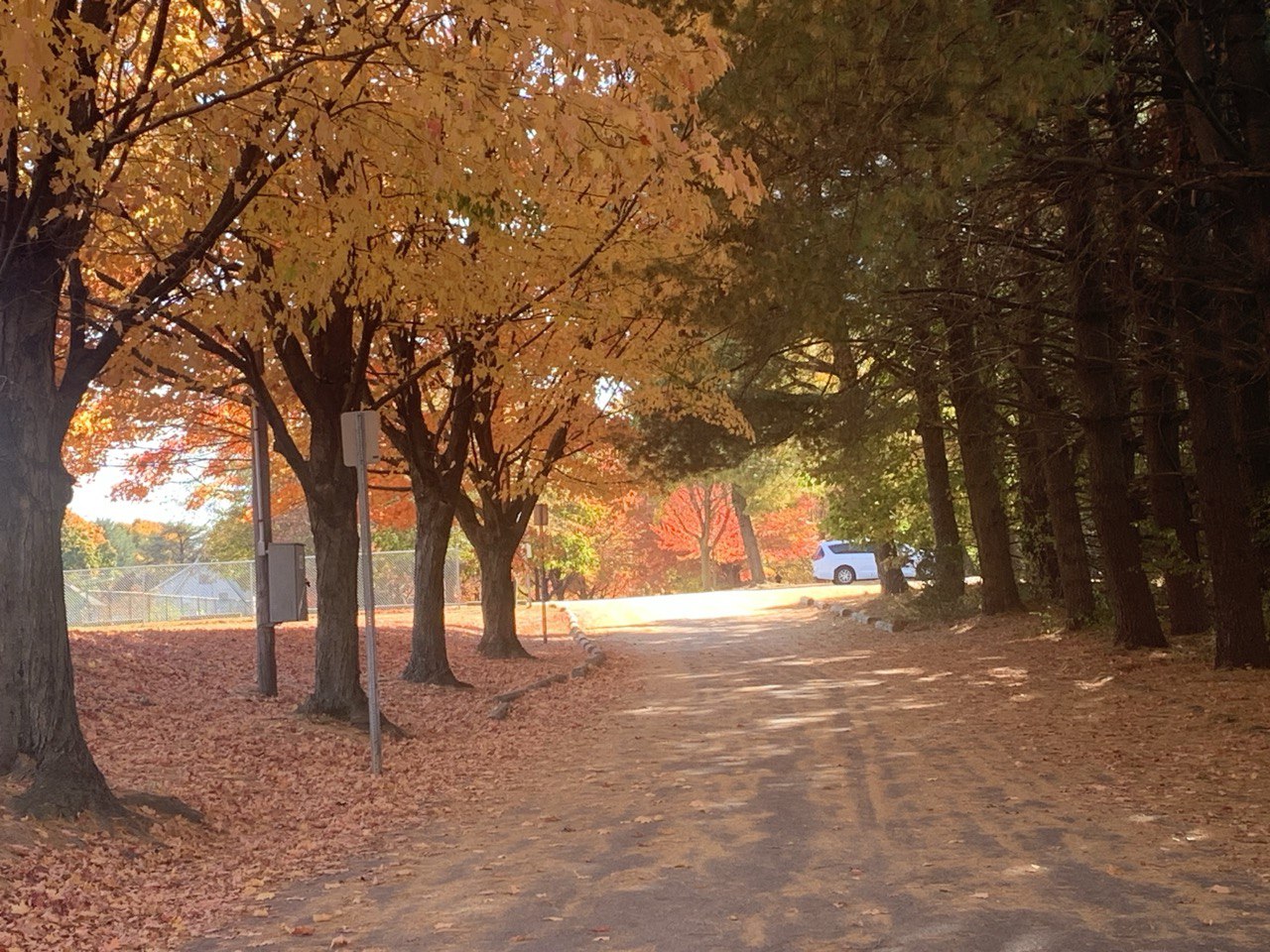
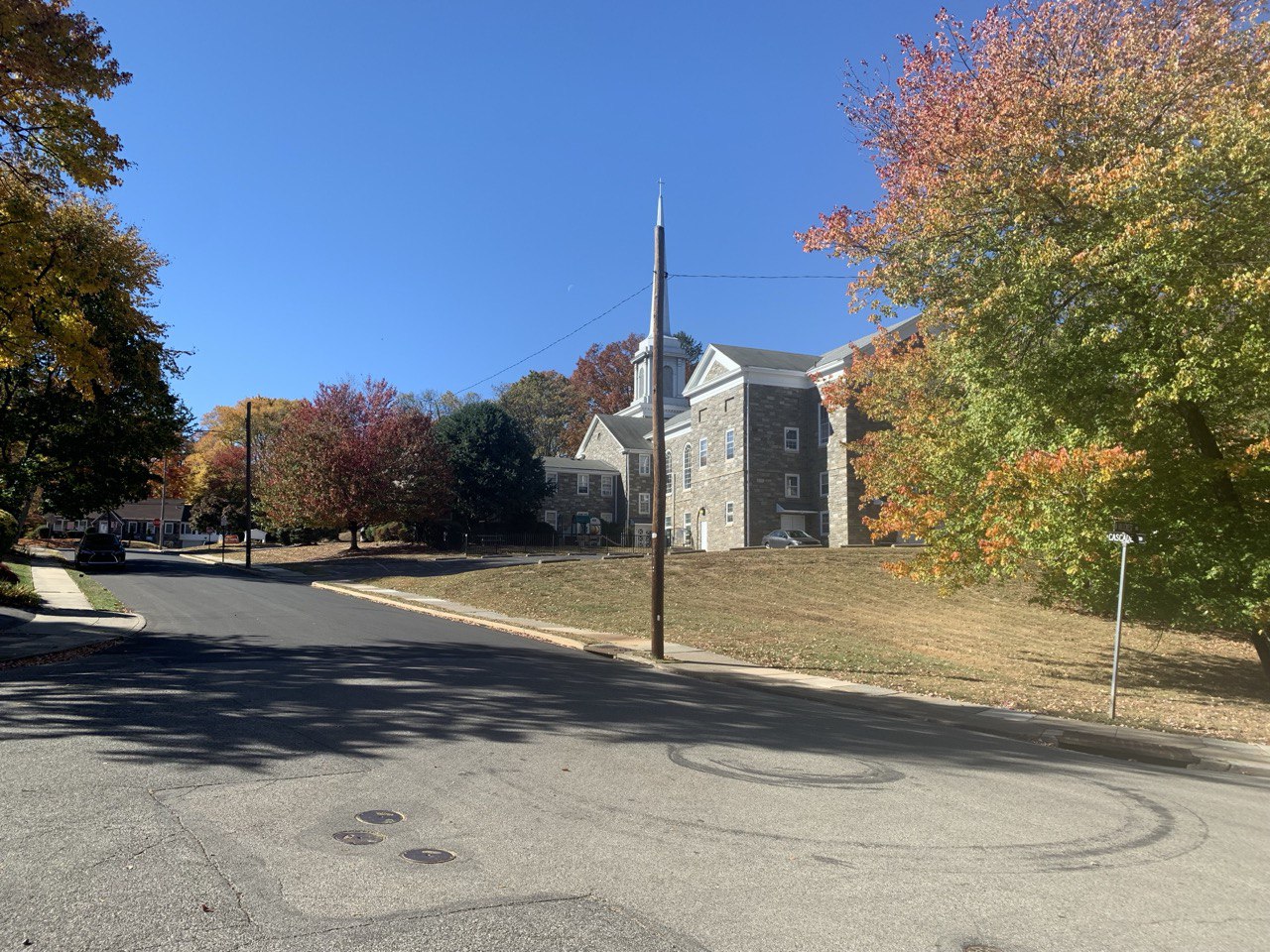
Autumn In Springfield — Here are some autumn pictures of Springfield, Delco, Pa.

Top is the First Presbyterian Church from Cascade Road.

Beneath it is the driveway in Veterans Memorial Park.

Autumn In Springfield

Autumn In Springfield

Autumn 2024 Starts Now

Autumn 2024 Starts Now — The 2024autumnal equinox is right now  8:44 a.m., EDT, Sept. 22 according to the Old Farmer’s Almanac as the sun crosses the celestial equator. Fall has arrived in the Northern Hemisphere, and the days are now shorter than the nights and will continue to be so until the spring equinox.

The celestial equator is a circle concentric with the actual equator that extends infinitely to space. As the Earth has a 23 degree tilt the the northern half tilts towards the Sun during half its orbit and away the other half. The equinoxes occur when tilt switches.

Autumn 2024 Starts Now — The 2024autumnal equinox is right now  8:44 a.m., EDT, Sept. 22 according to the Old Farmer’s Almanac as the sun crosses

Autumn 2024 Starts Now

Winter 2023-24 Starts Now

Winter 2023-24 starts 10:27 p.m. EST , Dec. 21, which is right now if our internet service provider’s clock is accurate.

This means that tilt of Earth’s semi-axis is most inclined to the sun in the Southern Hemisphere which is a solstice.

The axis will in a few moments slowly start reversing itself until it is the Northern Hemisphere that is most inclined to the sun.

This would be the start of our summer (and Argentina’s winter).

Today is the shortest day of the year.

Winter 2023-24 Starts Now

Summer 2023 Starts Now

Summer 2023 Starts Now — Summer 2023 starts 10:58 a.m. EDT , June 21, which is right now if our internet service provider’s clock is accurate.

This means that tilt of Earth’s semi-axis is most inclined to the sun in the Northern Hemisphere which is a solstice.

The axis will in a few moments slowly start reversing itself until it is the Southern Hemisphere that is most inclined to the sun.

This would be the start of our winter (and Argentina’s summer).

Today is the longest day of the year.

Summer 2023 Starts Now

Spring 2023 Starts Now 

Spring 2023 Starts Now –According to our server’s clock it is now  5:24 p.m. EDT, EDT, March 20, which means the vernal equinox is happening and Spring 2023 has begun.

Equinox is Latin for “equal night.” Days and nights are approximately equal everywhere and the Sun rises and sets due east and west, explains The Old Farmers Almanac. At the equinoxes, the tilt of Earth relative to the Sun is zero, which means that Earth’s axis neither points toward nor away from the Sun.

Vernal comes from the Latin vernalis which means spring.

Spring 2023 Starts Now 

Autumn 2022 Starts Now 

Autumn 2022 Starts Now — The 2022 autumnal equinox is right now  9:04 p.m., EDT, Sept. 22 according to the Old Farmer’s Almanac as the sun crosses the celestial equator. Fall has arrived in the Northern Hemisphere, and the days are now shorter than the nights and will continue to be so until the spring equinox.

The celestial equator is a circle concentric with the actual equator that extends infinitely to space. As the Earth has a 23 degree tilt the the northern half tilts towards the Sun during half its orbit and away the other half. The equinoxes occur when tilt switches.

Autumn 2022 Starts Now 
Autumn 2022 Starts Now

Seasonal Lag William Lawrence Sr Omnibit

The first day of summer is the longest day of the year but it is rarely the hottest due to seasonal lag. The extra daylight is heating the atmosphere but is also being absorbed by the earth and water. It won’t be for another month or so when the earth and water reach equilibrium with the atmosphere and start releasing back the heat they had been storing.

And that is why July and August have the reputation for being the hot months rather than June.

Seasonal Lag William Lawrence Sr Omnibit